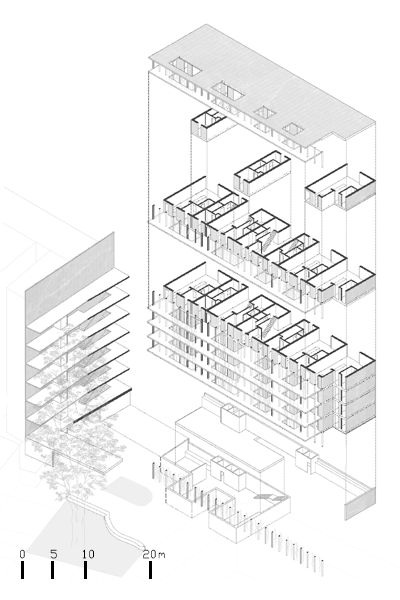
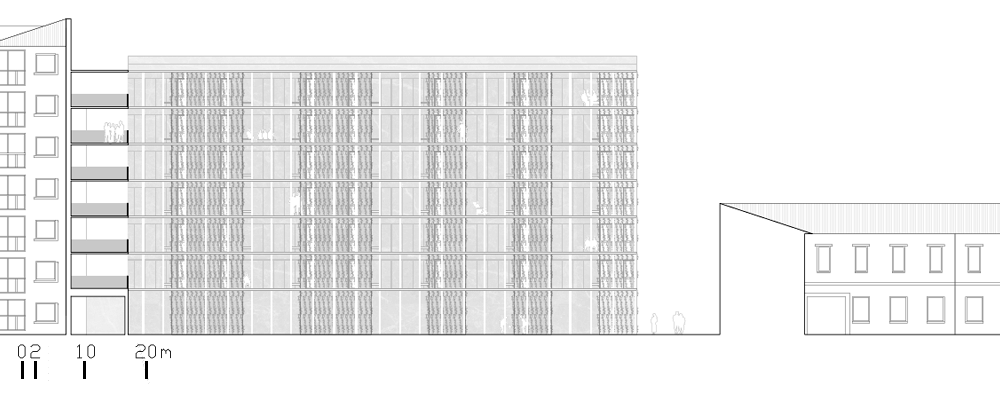
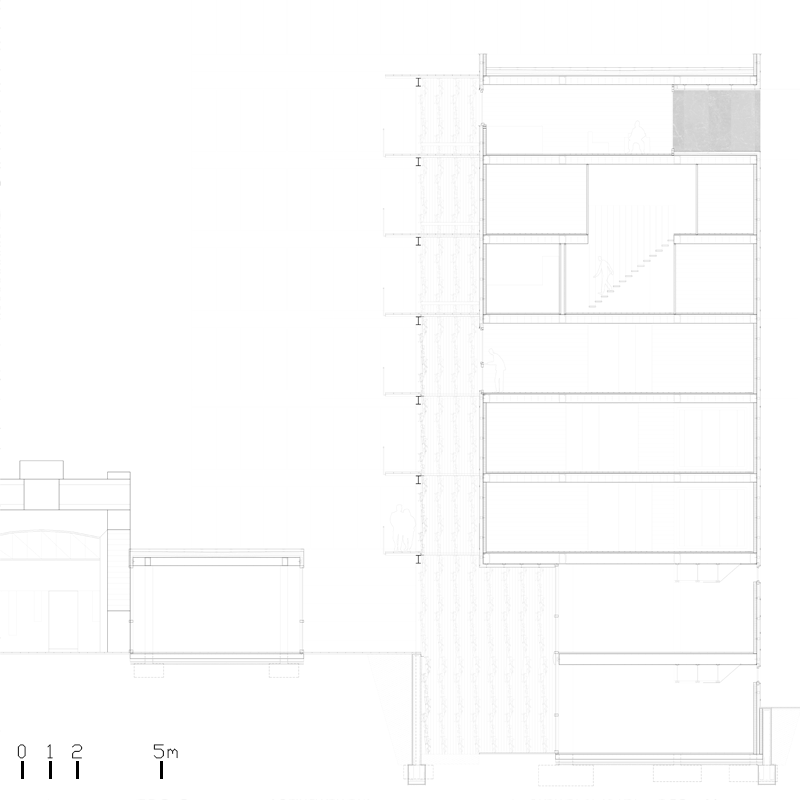
The vertical garden and the furniture integrated into the architecture transform the inner courtyard facade into a space that resolves three functions: circulation, social encounters, and a bioclimatic threshold. The vertical garden climbing through it acts as a natural solar and acoustic filter, enriching the uses and possibilities of this gallery.
El jardín vertical y el mobiliario integrado en la arquitectura hacen de la fachada del patio interior un espacio que resulve tres usos: circulaciones, encuentros y umbral bioclimático. El jardín vertical que trepa por ella funciona como un filtro solar natural y acústico, enriqueciendo los usos y posibilidades de esta galería.
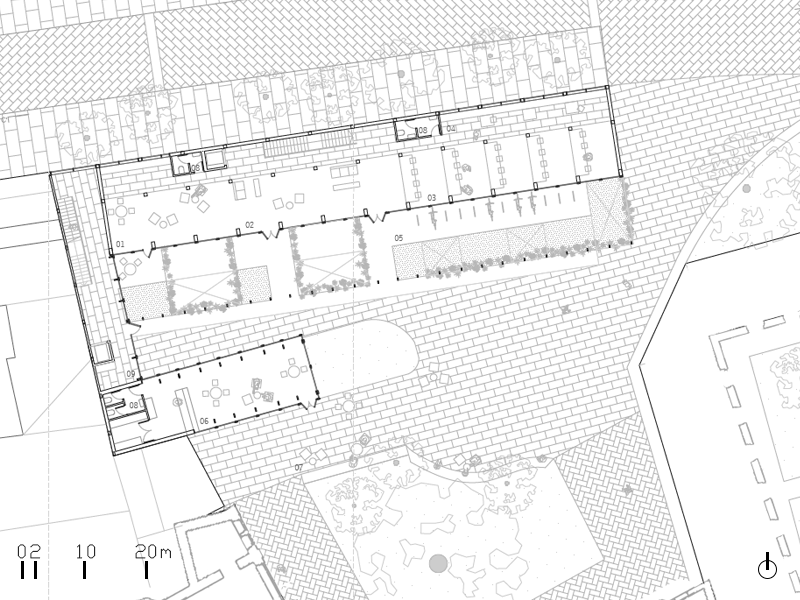
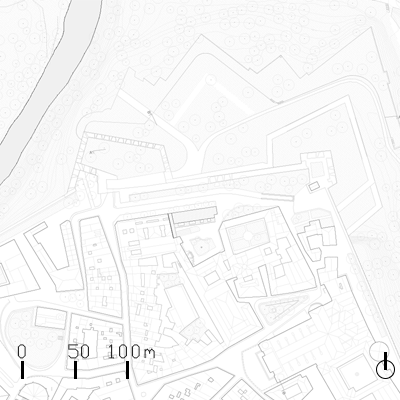
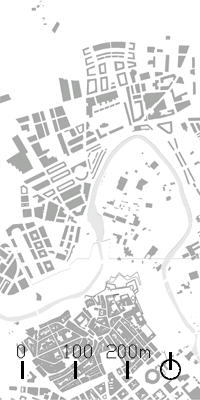
At the meeting point between the wall and the river, this project interprets how nature, orchards, and mountains have been introduced in the form of courtyards in a consolidated historic mineral center.
Two walls are proposed: a slimmer one on the dividing wall with the adjacent building, which houses the vertical communication core; and a more horizontal one, with the dwellings and shared spaces and uses. These two pieces form a central void, a light-hearted garden that dialogues with the tree and seeks to bring its inhabitants together and foster relationships.
En el punto de encuentro entre la muralla y el río, este proyecto lee cómo la naturaleza, las huertas, y las montañas que se han ido introduciendo en forma de patios en un casco histórico mineral consolidado.
Se plantean dos muros: uno más esbelto en la medianera con el edificio contiguo, que recoge el núcleo de comunicación vertical; y otro más horizontal, con las viviendas y espacios y usos compartidos. Estas dos piezas conforman un vacío central, un jardín con un carácter ligero que dialoga con el árbol y busca el encuentro y la relación de sus habitantes.
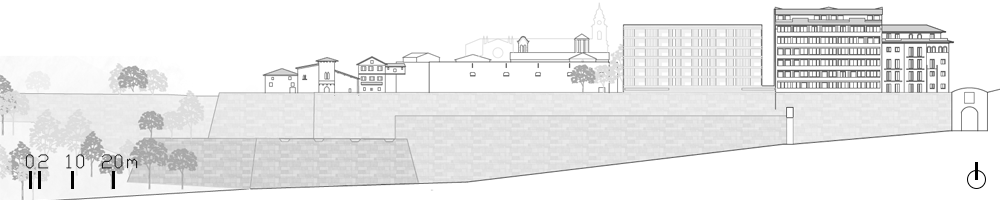
To the north, the dwellings form a mineral wall pierced by deep openings—a wall of new vertical ashlars that are occasionally replaced by glass, offering views of the mountains that only become perceptible at night when the inhabitant requires light. To the south, a climbing garden establishes varying levels of relationship and privacy within the access gallery of the homes. Access to the plaza is gained through a 'green funnel' from the top of the Paseo del Redín slope. On the east elevation, the world of the heavy exterior wall meets the lightweight interior garden.
The interior plaza becomes a space for connection between different types of vegetation. The tension wires (sirgas) dialogue with the large tree and the small garden built around it. The café emerges from its glass bubble to occupy the terrace under the shade of the trees; here, the benches—much like those in the access galleries—allow for the colonization of space in the same way as in other areas of the project.
The shared-use areas on the ground floor propose 'served spaces' that thrive on light and the south-facing garden, alongside darker 'servant' consultation spaces where a horizontal strip of light is opened. The floor beneath the dwellings is a continuous space, featuring a more playful area and a quieter one, yet remaining seamless, with circulation flowing along the northern strip.
Hacia el norte, las viviendas son un muro mineral orarado con huecos profundos, un muro de nuevos sillares verticales que se han sustituido a veces por vidrios que permiten ver las montañas, solo perceptibles en la noche cuando el habitante requieres de luz.
Por el sur trepa un jardín que establece distintas relaciones y privacidad con la galería de acceso a las viviendas. El acceso a la plaza es a través de un embudo verde desde lo alto de la cuesta del Paseo del Redín. En el alzado este se unen el mundo del muro pesado exterior y el jardín liviano interior.
La plaza interior se convierte en un espacio de conexión entre las vegetaciones. Las sirgas dialogan con el gran árbol y el pqeueño jardín construído alrededor.
La cafetería sale de su burbuja de vidrio, y puede ocupar en la terraza la sombra de los árboles en los bancos, que igual que en la galería de acceso a las viviendas permite colonizar de la misma forma que en otros ámbitos del proyecto.
Los usos compartidos en planta baja proponen unos espacios servidos que viven de la luz y el jardín al sur, y espacio de consulta servidores más oscuros en los que se abre una franja horizontal de luz. La planta bajo las viviendas es un espacio continuo con un ámbito más lúdico y uno más tranquilo, pero continuo, por el que se circula por la franja norte.
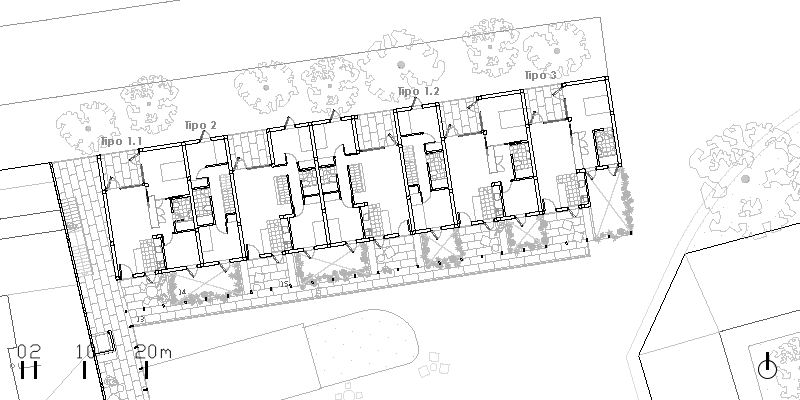
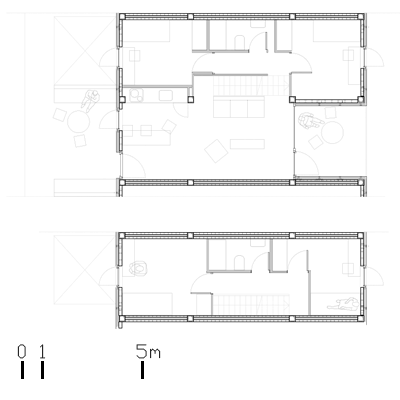
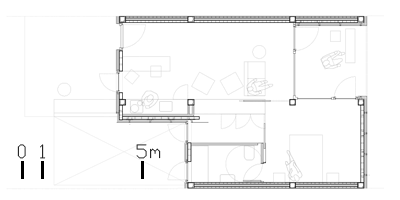
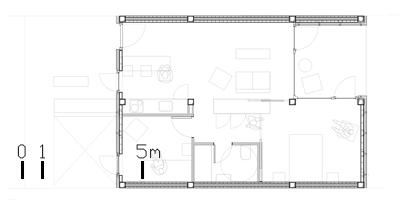
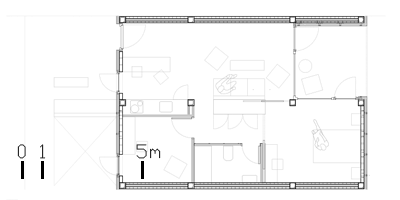
This project responds to a collective housing program for both the youth and the elderly, featuring shared living arrangements for the younger residents. The proposed typologies foster relationships and encounters among the inhabitants of each unit and with their neighbors.
The dwelling is conceived as two volumes: a dual-aspect living room attached to the bedroom and service areas. These two pieces are stitched together by a service core—containing the kitchen and storage—which, on the exterior, transforms into a bench, allowing residents to colonize the access gallery. The south-facing courtyards provide privacy for the rooms, particularly in the student apartments.
All typologies follow a general scheme: on one hand, the service core (kitchen, bathroom, and storage) acts as an organizing hinge, optimizing square footage to maximize living areas. On the other hand, the dual-aspect living room ensures cross-ventilation, visually connecting the interior garden with the exterior horizon and ensuring that natural light bathes the home throughout the day.
The proposal seeks to sew together two worlds: the rigidity of historical heritage and the mutability of nature. It is an architecture that learns from the traditional courtyard to apply it to a contemporary housing program, where value lies not only in the built square meter but in the quality of the shared void and the building's capacity to age alongside the city walls, eventually becoming another fragment of Pamplona’s geography.
Este proyecto da respuesta a un programa de viviendas para jóvenes y ancianos
de vivienda colectiva que, además, en el caso de los jóvenes, es compartida. Las
tipologías planteadas establecen relaciones y encuentros entre los habitantes
de cada vivienda y con sus vecinos.
La vivienda se plantea como dos piezas: un estar pasante adosado al dormitorio
y espacios servidores. Las dos piezas están cosidas por una pastilla de usos
servidores, tanto cocina como almacenamiento, que en el exterior se convierte
en un banco que permite al habitante colonicar la galería de acceso.
Los patios al sur permiten dar privacidad a las habitaciones, en especial a las
de los pisos de estudiantes.
Todas las tipologías responden a un esquema general: por un lado, la pastilla servidora (cocina, baño y almacenaje) actúa como rótula organizadora, optimizando los metros cuadrados para maximizar las áreas de estancia. Por otro lado, el estar pasante garantiza la ventilación cruzada, conectando visualmente el jardín interior con el horizonte exterior, asegurando que la luz natural bañe la vivienda durante todo el día.
La propuesta trata de coser dos mundos: la rigidez del patrimonio histórico y la mutabilidad de la naturaleza. Es una arquitectura que aprende del patio tradicional para aplicarlo a un programa de vivienda contemporáneo, donde el valor no reside solo en el metro cuadrado construido, sino en la calidad del vacío compartido y en la capacidad del edificio para envejecer junto a la muralla, convirtiéndose, con el tiempo, en un fragmento más de la geografía de Pamplona.
The north facade, conceived as a 'wall of new ashlar blocks,' acts as a contemporary echo of the stone masonry ramparts. The rhythm of the deep openings is not random; it responds to a deliberate intent to frame the landscape of Mount San Cristóbal, transforming the window into an observational device. At nightfall, the mineral opacity is reversed: the building dematerializes, and the glazed voids reveal the activity within, turning the facade into a domestic lighthouse that watches over the moat.
Towards the south, the project sheds its heaviness to embrace the lightness of wood and steel. The access gallery is not a mere distribution corridor but a bioclimatic threshold. The vertical garden climbing through it functions as a natural solar and acoustic filter. It is here that the design of the integrated furniture—that bench emerging from the dwelling's service core—gains its full meaning: it allows private life to overflow into the common space, fostering intergenerational encounters between the youth and the elderly.
La fachada norte, concebida como ese "muro de nuevos sillares", actúa como un eco contemporáneo de la muralla de sillería. El ritmo de los huecos profundos no es aleatorio; responde a una voluntad de enmarcar el paisaje del monte San Cristóbal, transformando la ventana en un dispositivo de observación. Al caer la noche, la opacidad mineral se invierte: el edificio se desmaterializa y los vacíos acristalados revelan la actividad interior, convirtiendo la fachada en un faro doméstico que vigila el foso.
Hacia el sur, el proyecto abandona la pesadez para abrazar la levedad de la madera y el acero. La galería de acceso no es un simple pasillo de distribución, sino un umbral bioclimático. El jardín vertical que trepa por ella funciona como un filtro solar natural y acústico. Es aquí donde el diseño del mobiliario integrado —ese banco que nace del núcleo de servicios de la vivienda— cobra sentido: permite que la vida privada se desborde hacia el espacio común, fomentando el encuentro intergeneracional entre los jóvenes y los ancianos.