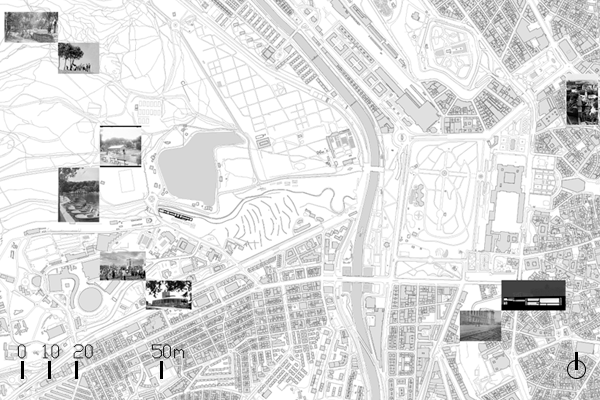


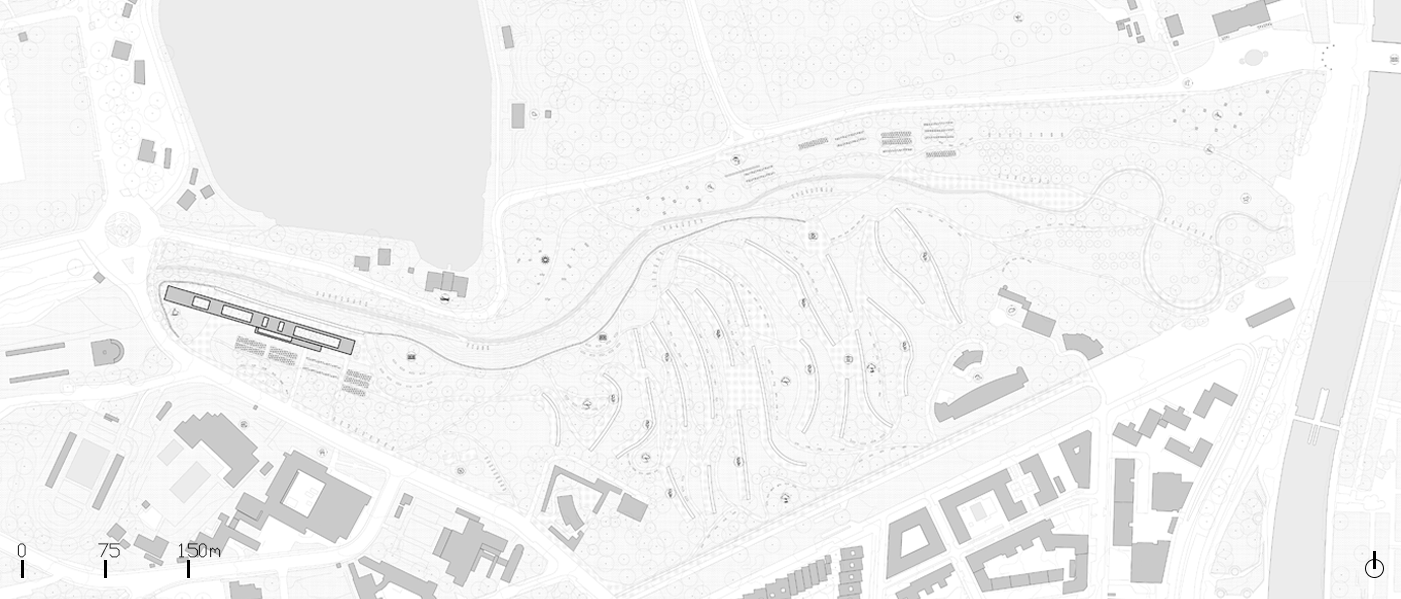

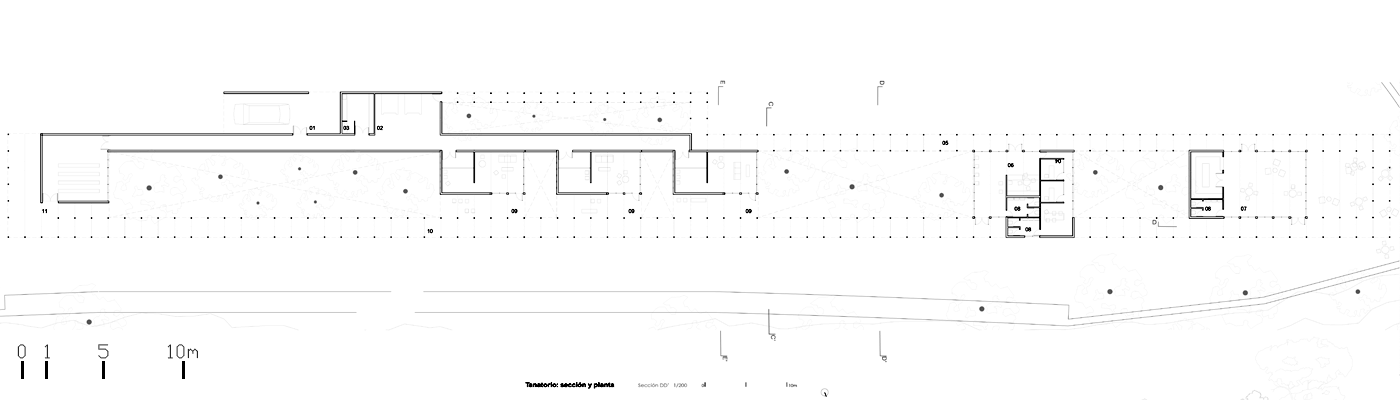

This cemetery in the Casa de Campo, at the boundary between the city and the park, emerges from a reflection on how the living confront the death of their loved ones.
Burying a person transforms a place; the physical marker helps us recognize, in our tangible reality, those who are no longer present. This cemetery is a place where these two processes occur: accompanying the living as they say farewell to a reality, and receiving the dead, becoming a physical point of reference. It is therefore a place of encounter between the death of some and the way the living face it.
Este cementerio en la Casa de Campo, en el límite entre la ciudad y el parque, surge a partir de la reflexión sobre cómo los vivos afrontamos la muerte de nuestros seres queridos. Enterrar a una persona transforma un lugar, el hito físico nos ayuda a reconocer en nuestra realidad física a aquellos que ya no están. Este cementerio es un lugar en el que se dan estos dos procesos: el de acompañar a los vivos a despedirse de una realidad, y ser receptora de la otra, convirtiéndose en una realidad física de referencia. Es un lugar, por tanto, de encuentro entre la muerte de unos y cómo los vivos la afrontan.
The enduring nature of mourning raises questions about the role cemeteries play within cities. In this approach, mourning is constructed as both an urban and a natural place: a park and a garden that form part of the city, just as the absence of those who are no longer here remains within people.
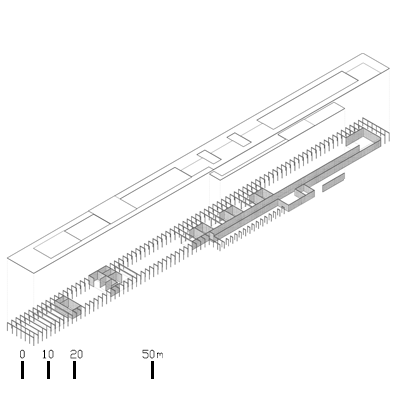
The architecture and the garden landscape accompany the visitor upon arrival and propose return through multiple uses. The cemetery offers an individual experience that arises from each person’s lived reality, allowing arrival or return to take place in the locations, routes, or means in which each visitor feels most comfortable at any given moment.
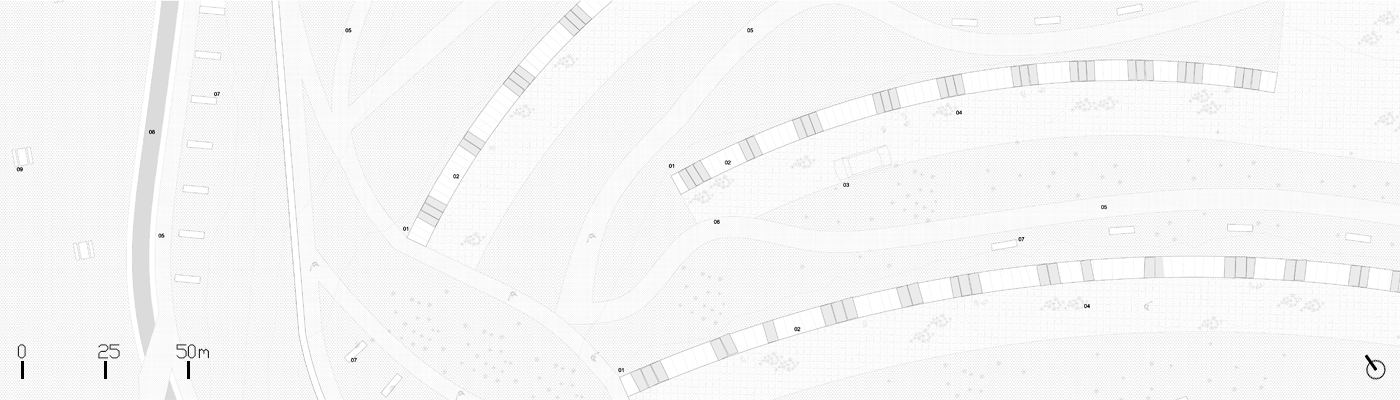
The cemetery is an open park, structured by boundaries that act as thresholds between different environments. It proposes cyclical routes across terraced landscapes, with paths for diverse users that connect places defined within a park program in which everyone has a place.
Along the edges of the terraces, niches and columbaria are inserted, and cladding is replaced to mark the physical presence of those who are buried. Each grouping provides families with a degree of intimacy within the public park; the key lies in the distances maintained between them and in relation to the park itself.
La naturaleza permanente del duelo plantea la reflexión sobre qué lugar ocupan los cementerios en las ciudades. En este planteamiento la presencia del duelo se construye como un lugar urbano y natural, un parque y un jardín que forma parte de la ciudad igual que la ausencia de los que ya no están permanece en las personas. La arquitectura y la naturaleza de los jardines acompaña al visitante en su primera llegada; y propone el regreso con múltiples usos. El cementerio propone la experiencia de cada uno, que surge de su vivencia; de forma que la llegada o el regreso pueda hacerse en los lugares o con los recorridos o medios en los que cada uno se sienta más cómodo en todo momento. El cementerio es un parque abierto, recorrido por límites que sirven de umbrales entre distintos ambientes. Propone recorridos cíclicos entre bancales, con caminos para diversos usuarios que unen lugares propuestos en un programa de parque en el que todos tenemos cabida.
En los límites de los bancales se abren nichos y columbarios, y se sustituye el aplacado para marcar la presencia física del que yace enterrado. Cada agrupación da a la familia de una intimidad dentro del parque público: la clave es la distancia que guardan entre ellas y con el parque.